
DONA International

HOME

11th Annual DONA International Conference

International Doula Magazine

eDoula Newsletter

POSITION PAPERS

on Birth Doulas

on Postpartum Doulas

Research

Birth Doula Practice Topics

Postpartum Doula Practice Topics

Marketing Your Practice

Partner Organizations


Search DONA  


DONA International
PO Box 626
Jasper, IN  47547
(888) 788-DONA (3662)
Fax: (812) 634-1491
Contact Us


Position Papers

Birth doulas make a difference

The doula is emerging as a positive contribution to the care of women in labor. By attending to the woman’s emotional needs, some obstetric outcomes are improved. Just as importantly, the early mother-infant relationships and breastfeeding are enhanced. Women’s satisfaction with their birth experiences and even their self-esteem appears to improve when a doula has assisted them through childbirth.

The Birth Doula’s Contribution to Modern Maternity Care
A DONA International Position Paper

The birth of each baby has a long lasting impact on the physical and mental health of mother, baby and family. In the twentieth century, we have witnessed vast improvements in the safety of childbirth, and now efforts to improve psychosocial outcomes are receiving greater attention.

The importance of fostering relationships between parents and infants cannot be overemphasized, since these early relationships largely determine the future of each family, and also of society as a whole. The quality of emotional care received by the mother during labor, birth and immediately afterwards is one vital factor that can strengthen or weaken the emotional ties between mother and child.(1-4) Furthermore, when women receive continuous emotional support and physical comfort throughout childbirth, their obstetric outcomes may improve.(5-10)

Women have complex needs during childbirth. In addition to the safety of modern obstetrical care, and the love and companionship provided by their partners, women need consistent, continuous reassurance, comfort, encouragement and respect. They need individualized care based on their circumstances and preferences. The role of the birth doula encompasses the non-clinical aspects of care during childbirth.

This paper presents the position of DONA International on the desirability of the presence of a birth doula at childbirth, with references to the medical and social sciences literature. It also explains the role of the doula in relation to the woman’s partner, the nurse and medical care providers. This paper does not discuss the postpartum doula, who provides practical help, advice and support to families in the weeks following childbirth. The postpartum doula is the subject of another DONA International Position Paper.

^Top

Role of the Doula

In nearly every culture throughout history, women have been surrounded and cared for by other women during childbirth. Artistic representations of birth throughout the world usually include at least two other women surrounding and supporting the birthing woman. One of these women is the midwife, who is responsible for the safe passage of the mother and baby; the other woman or women are behind or beside the mother, holding and comforting her(11). The modern birth doula is a manifestation of the woman beside the mother.

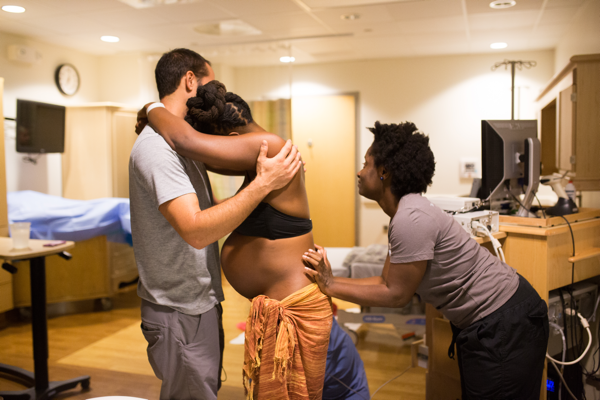
Birth doulas are trained and experienced in childbirth, although they may or may not have given birth themselves. The doula’s role is to provide physical and emotional support and assistance in gathering information for women and their partners during labor and birth. The doula offers help and advice on comfort measures such as breathing, relaxation, movement, and positioning. She also assists the woman and her partner to become informed about the course of her labor and their options. Perhaps the most crucial role of the doula is providing continuous emotional reassurance and comfort.

Doulas specialize in non-medical skills and do not perform clinical tasks, such as vaginal exams or fetal heart rate monitoring. Doulas do not diagnose medical conditions, offer second opinions, or give medical advice. Most importantly, doulas do not make decisions for their clients; they do not project their own values and goals onto the laboring woman.(12)

The doula’s goal is to help the woman have a safe and satisfying childbirth as the woman defines it. When a doula is present, some women feel less need for pain medications, or may postpone them until later in labor; however, many women choose or need pharmacological pain relief. It is not the role of the doula to discourage the mother from her choices. The doula helps her become informed about various options, including the risks, benefits and accompanying precautions or interventions for safety. Doulas can help maximize the benefits of pain medications while minimizing their undesirable side effects. The comfort and reassurance offered by the doula are beneficial regardless of the use of pain medications.

See Labor Support Terminology (right)

^Top

The Doula and the Partner Work Together

The woman’s partner (the baby’s father or another loved one) is essential in providing support for the woman. A doula cannot make some of the unique contributions that the partner makes, such as a long-term commitment, intimate knowledge of the woman and love for her and her child. The doula is there in addition to, not instead of, the partner. Ideally, the doula and the partner make the perfect support team for the woman, complementing each other’s strengths.

In the 1960s, the earliest days of fathers’ involvement in childbirth, the expectation was that they would be intimately involved as advisors, coaches and decision-makers for women. This turned out to be an unrealistic expectation for most men because they had little prior knowledge of birth or medical procedures and little confidence or desire to ask questions of medical staff. In addition, some men felt helpless and distressed over the women’s pain and were not able to provide the constant reassurance and nurturing that women needed. With a doula present, the pressure on the father is decreased and he can participate at his own comfort level. Fathers often feel relieved when they can rely on a doula for help; they enjoy the experience more. For those fathers who want to play an active support role, the doula assists and guides them in effective ways to help their loved ones in labor. Partners other than fathers (lovers, friends, family members) also appreciate the doula’s support, reassurance and assistance.

^Top

Doulas as Members of the Maternity Care Team

Each person involved in the care of the laboring woman contributes to her emotional well-being. However, doctors, nurses and midwives are primarily responsible for the health and well-being of the mother and baby. Medical care providers must assess the condition of the mother and fetus, diagnose and treat complications as they arise, and focus on a safe delivery of the baby. These priorities rightly take precedence over the non-medical psychosocial needs of laboring women. The doula helps ensure that these non-medical needs are met while enhancing communication and understanding between the woman or couple and the staff. Many doctors, midwives and nurses appreciate the extra attention given to their patients and the greater satisfaction expressed by women who were assisted by a doula.(19)

Research Findings

In the late 1970s, when Drs. John Kennell and Marshall Klaus investigated ways to enhance maternal-infant bonding they found, almost accidentally, that introducing a doula into the labor room not only improved the bond between mother and infant, but also seemed to decrease the incidence of complications.(6,7) Since their original studies, published in 1980 and 1986, numerous scientific trials have been conducted in many countries comparing usual care with usual care plus a doula.

Table 1 summarizes the findings of North American trials and a meta-analysis of all trials of continuous labor support.(12) Obstetric outcomes were most improved and intervention rates most dramatically lowered by doulas in settings where the women had no loved ones present, the intervention rates were routinely high (as indicated by the data for the control groups) and the doulas were not health care professionals.

View Table 1
Results of 7 North American Trials of Labor Support including 2259 women

^Top

Services and Costs

There are two basic types of doula services: independent doula practices and hospital/agency doula programs. Independent doulas are employed directly by the expectant parents. They usually have telephone contact and one or more prenatal meetings with their clients to establish a relationship. When labor begins, the doula arrives and stays with the woman until after the birth. A postpartum meeting to process the birth is usually included in the doula’s service. Most doulas charge a flat fee for their services, and many base their fees on a sliding scale.

Some doula programs are associated with or administered by a hospital or community service agency. The doulas may be volunteers or paid employees of the hospital or agency. These programs vary widely in their design. In some, the hospital or agency contracts with an independent community-based doula group to provide the doulas. Others train and employ their own staff of doulas. Payment of the doula may come from the institution, the client, or it may be shared by the two. Some hospital/agency services are set up as on-call doula services. A rotating call schedule ensures that there are one or more doulas available at all times. They meet the client for the first time and establish their relationship during labor.

Other hospital/agency doula programs make doula services available to expectant mothers or couples, who may meet and choose their doula, or have one assigned to them, along with a backup doula. They may work with their doula in much the same way that private doulas and clients work together.

Over 25 insurance companies have provided some third party reimbursement for labor support. Grant funding is also occasionally available and some Medicaid-funded health agencies have contracts with doula organizations to support women in poverty and women with special needs. Although some health insurance and flex pay plans pay for doulas, at present doula care is usually paid for directly by the client.

See Questions to Ask a Birth Doula (right)

^Top

Training and Certification

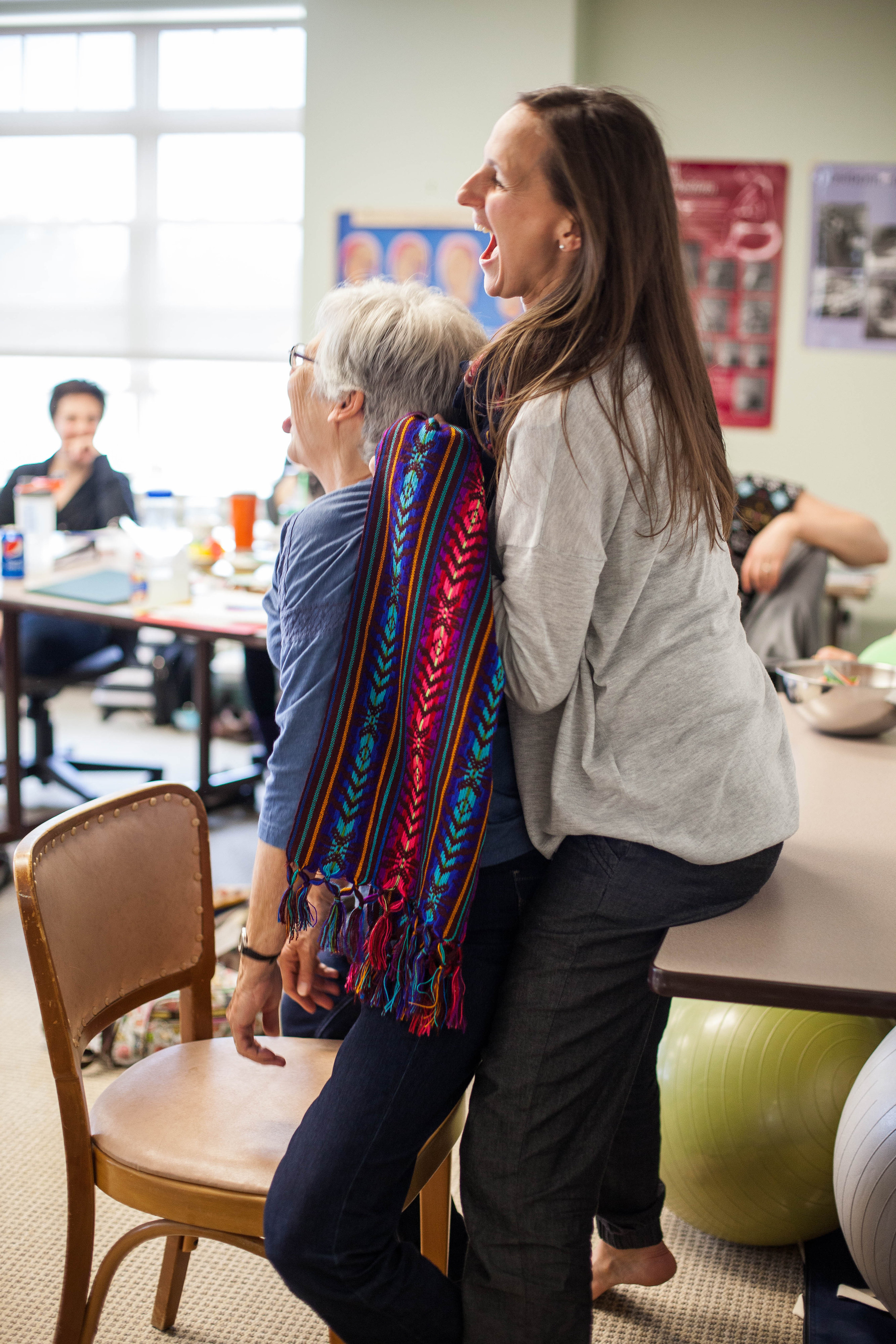
Doula training focuses on the emotional needs of women in labor and non-medical physical and emotional comfort measures. The programs require that participants have some prior knowledge, training and experience relating to childbirth, and consists of an intensive two or three day seminar, including hands-on practice of such skills as relaxation, breathing, positioning and movements to reduce pain and enhance labor progress, touch, and other comfort measures.

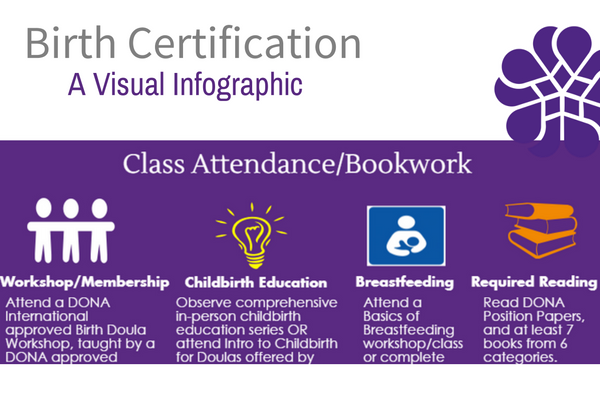
For certification, the doula must have a background of work and education in the maternity field, or she must observe a series of childbirth classes or equivalent. She must also complete the following: a doula workshop course offered by a DONA Approved Doula Trainer, a breastfeeding requirement, required reading,development of a resource list for her clients, an essay that demonstrates understanding of the integral concepts of labor support and a Basic Knowledge Self Assessment Test. Lastly, she provides positive evaluations from clients, doctors or midwives and nurses along with detailed observations from a minimum number of births.

Summary and Conclusion

In summary, the doula is emerging as a positive contribution to the care of women in labor. By attending to the women’s emotional needs, some obstetric outcomes are improved. Just as importantly, early mother-infant relationships and breastfeeding are enhanced. Women’s satisfaction with their birth experiences and even their self-esteem appears to improve when a doula has assisted them through childbirth.

Analysis of the numerous scientific trials of labor support led the prestigious scientific group, The Cochrane Collaboration’s Pregnancy and Childbirth Group in Oxford, England to state: “Given the clear benefits and no known risks associated with intrapartum support, every effort should be made to ensure that all labouring women receive support, not only from those close to them but also from specially trained caregivers. This support should include continuous presence, the provision of hands-on comfort, and encouragement.” (10)

^Top

References

  1. Hofmeyr J, Nikodem VC, Wolman WL, Chalmers BE, Kramer T. “Companionship to modify the clinical birth environment: effects on progress and perceptions of labour, and breastfeeding,” Br J Obstet Gynaecol, 98:756-764, 1991.
  2. Wolman WL, Chalmers B, Hofmeyr J. Nikodem VC. “Postpartum depression and companionship in the clinical birth environment: a randomized, controlled study,” Am J Obstet Gynecol, 168:1388-1393, 1993.
  3. Langer A, Campero L, Garcia C, Reynoso S. “Effects of psychosocial support during labour and childbirth on breast feeding, medical interventions, and mothers’ well-being in a Mexican public hospital: a randomised clinical trial.” Br J Obstet Gynaecol, 105:1056-1063, 1998.
  4. Martin S, Landry S, Steelman L, Kennell JH, McGrath S. “The effect of doula support during labor on mother-infant interaction at 2 months,” Infant Behav Devel, 21:556, 1998.
  5. Sosa R, Kennell JH, Klaus MH, Robertson S, Urrutia J. “The effect of a supportive companion on perinatal problems, length of labor, and mother-infant interaction,” N Engl J Med, 303:597-600, 1980.
  6. Klaus MH, Kennell JH, Robertson SS, Sosa R. “Effects of social support during parturition on maternal and infant morbidity,” Br Med J, 293:585-587, 1986.
  7. Kennell JH, Klaus MH, McGrath SK, Robertson S, Hinkley C. “Continuous emotional support during labor in a US hospital: a randomized controlled trial,” JAMA, 265:2197- 2201, 1991.
  8. Kennell JH, McGrath SK “Labor support by a doula for middle-income couples; the effect on cesarean rates,” Pediatric Res, 32:12A, 1993.
  9. McGrath SK, Kennell JH, “Induction of labor and doula support,” Pediatric Res, 43(4):Part II, 14A, 1998.
  10. Hodnett E, Gates S, Hofmeyr G, Sakala C. Continuous support for women during childbirth. The Cochrane Database of Systematic Reviews 2003. Issue 3, Art. No. CD003766. DOI: 10.1002/14651858.CD003766.
  11. Ashford JI. George Engelmann and Primitive Birth. Janet Isaacs Ashford, Solana Beach, CA, 1988.
  12. DONA International, Code of Ethics (2006) and Standards of Practice,(2008). DONA International, Jasper, IN.
  13. Cogan R, Spinnato JA. “Social support during premature labor: effects on labor and the newborn,” J Psychosom Obstet Gynaecol, 8:209-216, 1988.
  14. Hodnett ED, Osborn RW. “Effects of continuous intrapartum professional support on childbirth outcomes,” Res Nurs Health, 12:289-297, 1989.
  15. Gordon NP, Walton D, McAdam E, Derman J, Gallitero G, Garrett L. “Effects of providing hospital-based doulas in health maintenance organization hospitals.” Obstet Gynecol, 93(3):422-426, 1999.
  16. Trueba G, Contreras C, Velazco M, Lara E, Martinez H. Alternative strategy to decrease cesarean section: support by doulas during labor. J Perinat Educ, 9:1-6, 2000.
  17. Gagnon, A, Waghorn K, Covell C. A randomized
    trial of one-to-one nurse support of women in labor. Birth,
    24:71-80. 1997.
  18. Hodnett E, Lowe N, Hannah M, Willan A, Stevens
    B, Weston J et al. Effectiveness of nurses as providers of
    labor support in North American hospitals: a randomized
    controlled trial. JAMA 288:1474-81, 2002.
  19. Gilliland AL. “Commentary: nurses, doulas, and
    childbirth educators,” J Perinatal Ed, 7:18-24, 1998.

^Top

This paper was written by Penny Simkin and Kelli Way and reviewed by the 1998 DONA Board of Directors. Revised editions have been reviewed and approved by the subsequent DONA International Board of Directors. Latest approval 2008.

For more information about doulas, contact:

DONA International
(888) 788-DONA
www.DONA.org

To purchase copies of this paper, contact DONA International at the number above or order them on-line in the DONA Boutique.

© DONA International 1998, 2005, 2006, 2008.
Permission granted to freely reproduce in whole or in part with complete attribution.


Purchase the beautiful, newly designed Position Papers on the DONA Boutique

Labor Support Terminology

The terminology describing labor support can be confusing. When a person uses any of the terms below to describe herself, she may need to clarify what she means by the term.

Doula – a Greek word meaning a woman who serves. In labor support terminology,a doula refers to a specially trained birth companion (not a friend or loved one) who provides labor support. She performs no clinical tasks. Doula also refers to lay women who are trained or experienced in providing postpartum care (mother and newborn care, breastfeeding support and advice, cooking, child care, errands, and light cleaning) for the new family. To distinguish between the two types of doulas, the terms birth doulas and postpartum doulas are used.

Monitrice – a French word originally used by Fernand Lamaze to refer to a specially trained nurse or midwife who provides nursing care and assessment, in addition to labor support. Today, monitrice is often used as a synonym for birth assistant or labor assistant.

Labor Support Professional, Labor Support Specialist, Labor Companion – synonyms for birth doula.

Birth Assistant, Labor Assistant – sometimes these terms are used as synonyms for doula, but also may refer to lay women who are trained to assist a midwife (vaginal exams, set up for birth, fetal heart checks, etc.) as well as to provide some labor support.

Questions to Ask a Birth Doula

In selecting a doula, the following questions should help expectant parents make a good decision. These same questions might also be asked by maternity care professionals who wish to know more.

  • What training have you had? (If a doula is certified, you might consider checking with the organization)
  • Tell me about your experience with birth, personally and as a doula.
  • What is your philosophy about birth and supporting women and their partners through labor?
  • May we meet to discuss our birth plans and the role you will play in supporting me through birth?
  • May we call you with questions or concerns before and after the birth?
  • When do you try to join women in labor? Do you come to our home or meet us at the hospital?
  • Do you meet with us after the birth to review the labor and answer questions?
  • Do you work with one or more back up doulas for times when you are not available?
  • May we meet them?
  • What are your fees and your refund policies?

Learn more in the For Mothers & Families section of this website
How to Hire a Doula


^Top

HOME
FOR MOTHERS & FAMILIES
JOIN US
PROFESSIONAL DEVELOPMENT
PUBLICATIONS & RESOURCES
ABOUT US
NEWS & EVENTS
DONA BOUTIQUE
DOULA TALK
CONTACT US

© 2005 DONA International

Site development by
dietrich design(s)